Flying is often seen as the safest way to travel, yet there are still a handful of airports around the world where landing remains a genuine test of nerves, skill and experience. Top of the list is Lukla Airport in Nepal, the tiny mountain airstrip that serves as the gateway to Everest Base Camp. For many travellers, the flight into Lukla is the most frightening part of their entire trip.
Lukla: the runway with no escape
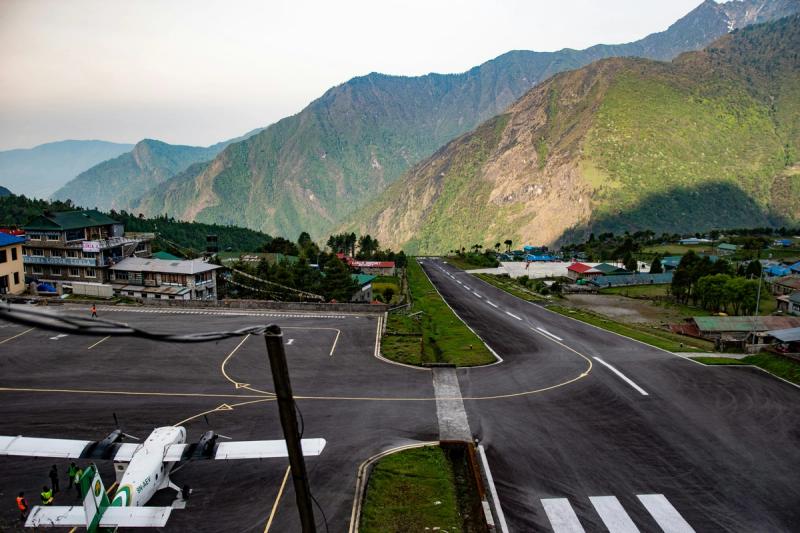
Officially known as Tenzing–Hillary Airport, Lukla sits at an altitude of over 9,000 feet in the Himalayan mountains. Its runway measures just 527 metres and slopes sharply upwards, ending abruptly at a rock face on one side and a sheer cliff on the other. There is no second chance. Pilots either commit to the landing or abandon it entirely before touching down.
Weather is the biggest challenge. Clouds can roll in within minutes, visibility can vanish without warning, and strong winds funnel through the surrounding valleys. Flights are often delayed for days during peak trekking season, leaving passengers stranded in Kathmandu or at nearby regional airports.
Despite its reputation, Lukla is not reckless. Only pilots with significant experience in short‑haul mountain flying are allowed to land there, and aircraft are smaller turboprops designed for extreme conditions. Even so, accidents have occurred, cementing Lukla’s reputation as the most dangerous commercial airport in the world.
For travellers bound for Everest, the Lukla flight is a rite of passage. Fear, excitement and relief combine the moment the wheels touch down.
Paro, Bhutan: breathtaking but unforgiving
Another Himalayan airport that tests even the most seasoned pilots is Paro Airport in Bhutan. Nestled between steep mountains, Paro requires a manual landing with no radar guidance. Flights wind through narrow valleys before dipping sharply onto the runway.
Only a small group of Bhutanese pilots are certified to land here, and flights operate exclusively during daylight hours. For passengers, the approach offers dramatic views of cliffs, temples and forests, followed quickly by applause when the journey ends safely.
Madeira: winds that rewrite flight plans
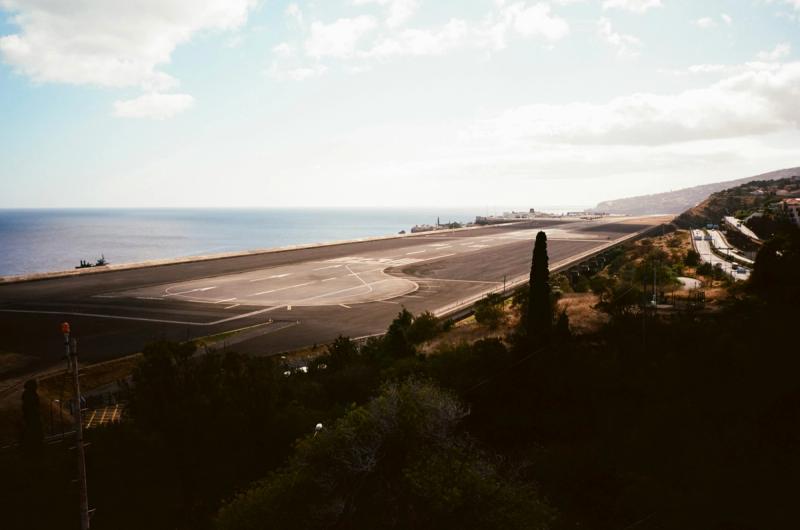
Europe’s most notorious airport is Madeira’s Cristiano Ronaldo Airport. Built partly on stilts over the ocean, its runway looks deceptively benign. The danger lies in the unpredictable Atlantic winds that can force pilots to abort landings at the last second.
Diversions are common, and passengers often experience multiple attempts before either landing or rerouting to mainland Portugal. The airport is safe by all regulatory standards, but landing there remains a white‑knuckle experience on blustery days
Saba: the shortest commercial runway
In the Caribbean, Juancho E. Yrausquin Airport on the island of Saba has the shortest commercial runway in the world at just 400 metres. There is no overrun, no margin for error, and the sea awaits at both ends.
Only a select few aircraft and pilots are authorised to operate here. The approach is steep, the landing is sudden, and the braking is immediate. For first‑time visitors, it’s an unforgettable introduction to island hopping.
St Helena: isolation and wind shear
When St Helena Airport finally opened after years of delays, it promised to end the island’s isolation. Instead, complex wind patterns and wind shear caused severe operational challenges. Flights are regularly cancelled or diverted, and only certain aircraft types can safely land.
Though not extreme in runway length or terrain, St Helena’s geography creates conditions that make every landing a calculated decision rather than a routine arrival.
Why dangerous airports still exist
These airports serve communities and destinations that would otherwise be cut off from the world. Building longer runways, flattening mountains or relocating airports is often impossible. Instead, safety is maintained through strict pilot training, careful aircraft selection and conservative operating rules.
Statistically, flying into these airports remains safe. Accidents are rare, and aviation standards continue to improve. Yet the combination of geography, weather and human skill means these flights will never feel ordinary.
For travellers, that is part of the appeal. Landing at Lukla, threading through Bhutan’s valleys or touching down on a windswept Atlantic runway turns a simple flight into a story worth telling.
In an era where air travel is increasingly routine, these airports remind us that flying can still feel like an adventure.