Passengers flying across Europe can experience very different levels of disruption depending on which airport they depart from. While many flights leave only slightly behind schedule, a small number of major airports are responsible for a disproportionate share of Europe’s longest and most frustrating delays.
Although the average delay across Europe is relatively modest, disruption becomes far more noticeable once flights tip beyond the one‑hour mark, particularly at large, congested hubs.
European airports with the worst delays
Based on how often delays occur and how severe they become once disruption sets in, the following airports consistently perform among the worst in Europe.
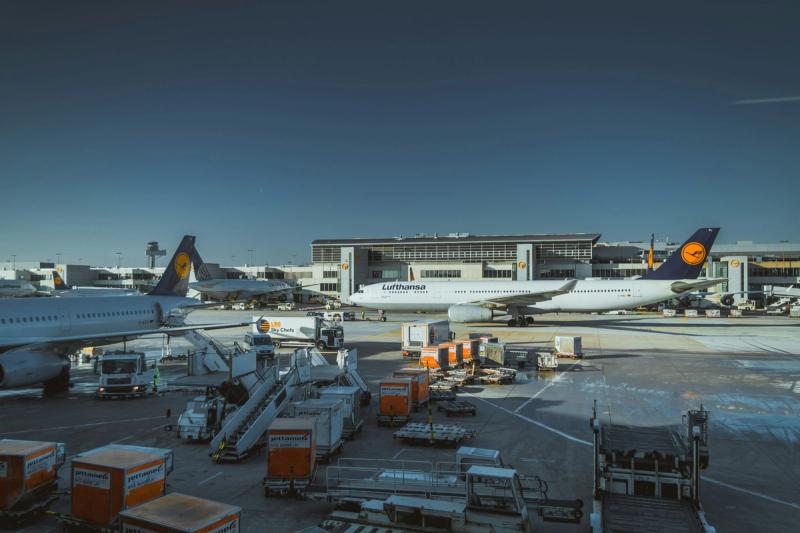
Frankfurt Airport (Germany)
- Known for the longest average delays once disruption occurs
- Severe delays frequently stretch to around four hours
- Less frequent than some airports, but extremely long when they happen
- Large international hub with significant knock‑on disruption
Lisbon Humberto Delgado Airport (Portugal)
- Records one of the highest proportions of flights delayed over one hour
- Long delays are common rather than occasional
- On severely disrupted days, delays often exceed one to two hours
- Operational constraints and airspace congestion play a major role
Paris Charles de Gaulle (France)
- Stands out for the sheer volume of long delays
- Thousands of flights each year depart or arrive more than an hour late
- When disruption occurs, delays typically last one to two hours or more
- Vulnerable to knock‑on delays due to its role as a major transfer hub
Manchester Airport (United Kingdom)
- One of the poorest performers when frequency and severity are combined
- Passengers regularly experience delays exceeding one hour
- Disruption is both frequent and extended, particularly during busy periods
Amsterdam Schiphol (Netherlands)
- Experiences repeated disruption during peak travel periods
- Delays are moderately frequent but can become prolonged once congestion builds
- Severe delays often last between one and two hours during disruption
How long are delays on average?
It is important to distinguish between everyday delays and serious disruption:
- Across Europe, the average flight delay is around 15 minutes
- Most flights depart close to schedule
- Passenger frustration tends to come from severe delays, not minor ones
At the airports listed above:
- Severe delays typically start at 60 minutes
- Once that threshold is crossed, delays often extend well beyond an hour
- At the worst‑affected hubs, delays of two to four hours are not unusual during periods of disruption
Why delays are worse at major hub airports
Delays tend to be more severe at Europe’s largest airports because:
- Aircraft, crews and gates are tightly scheduled
- Early disruption quickly compounds throughout the day
- Congested airspace limits recovery opportunities
- Weather or staffing issues affect multiple flights at once
Once a major airport begins falling behind schedule, recovery becomes increasingly difficult as the day progresses.
Airports with better on‑time performance
By comparison, several European airports consistently record stronger punctuality and fewer severe delays.
Examples of more reliable airports
- Bergen (Norway) – high proportion of on‑time departures
- Oslo (Norway) – consistently reliable scheduling
- Copenhagen (Denmark) – strong operational resilience
- Stockholm (Sweden) – lower congestion and better punctuality
While no airport is immune to delays, these locations tend to avoid the prolonged disruption seen at larger hubs.
What happens if you are delayed and miss a connecting flight
Delays become far more stressful when a journey involves a connecting flight. If your first flight arrives late and you miss your onward connection, what happens next depends largely on how your ticket was booked and where you are travelling.
If both flights were booked together on a single ticket, even if they are operated by different airlines, responsibility usually sits with the airline. In most cases, passengers will be rebooked onto the next available flight to their final destination at no extra cost. Depending on the length of the delay, the airline may also be required to provide meals, refreshments or hotel accommodation while alternative travel arrangements are made.
Problems are more likely when connections are booked separately. If a delay causes you to miss a self‑booked connection, the onward flight is typically treated as a no‑show, meaning the airline has no obligation to rebook you. This can leave passengers facing unexpected costs and long waits, particularly at busy hub airports during peak travel periods.
Your rights during long connection delays
For travellers flying within Europe, or on routes covered by European passenger rights legislation, additional protections may apply. When long delays or missed connections result in arrival at your final destination several hours later than planned, passengers may be entitled to care, and in some cases financial compensation, provided the delay was within the airline’s control.
Even where compensation is not due, airlines are generally expected to assist stranded passengers by arranging alternative flights and providing basic care during the disruption. At major hub airports, however, recovery can be slow once delays begin to cascade, which is why allowing generous connection times — particularly in the afternoon and evening, can significantly reduce risk.
Best time to fly to avoid delays
While delays can occur at any time of day, evidence consistently shows that earlier departures are far less likely to be disrupted. Flights scheduled for the morning tend to operate closer to schedule because aircraft, crews and airport operations are starting fresh. As the day progresses, even small delays can compound, leading to increasing disruption by the afternoon and evening.
Late‑day flights are therefore more vulnerable to knock‑on delays caused by earlier problems elsewhere in the network. For travellers looking to minimise the risk of disruption, booking the first departure of the day and avoiding peak evening travel at major hub airports can make a meaningful difference.
What this means for travellers
While passengers cannot control airport operations, understanding where delays are most severe can help with planning. Choosing earlier departures, allowing extra connection time and avoiding peak periods at major hubs can all reduce the risk of disruption.
As European air travel continues at high capacity, airport punctuality remains a key factor shaping the passenger experience.